

Breaking Down the Process: Reaction Intermediates in Pharmaceutical Synthesis
Jan 01,2026


Breaking Down the Process: Reaction Intermediates in Pharmaceutical Synthesis
Table of Contents
- 1. Introduction to Reaction Intermediates in Pharmaceuticals
- 2. Understanding Reaction Intermediates
- 3. Types of Reaction Intermediates
- 4. The Role of Reaction Intermediates in Drug Development
- 5. Methods of Synthesizing Reaction Intermediates
- 6. Case Studies: Successful Implementation of Intermediates
- 7. Challenges in Working with Reaction Intermediates
- 8. Future Directions in Pharmaceutical Synthesis
- 9. Conclusion
- 10. Frequently Asked Questions
1. Introduction to Reaction Intermediates in Pharmaceuticals
In the realm of pharmaceutical synthesis, **reaction intermediates** play an indispensable role. These fleeting species are not the final products but rather the transitional compounds formed during the chemical reactions that lead to the development of drugs. Understanding these intermediates is crucial for optimizing synthetic pathways, enhancing drug efficacy, and ensuring safety in pharmaceutical applications.
In this article, we will break down the complexities of reaction intermediates, delve into their various types, and explore their significance in the pharmaceutical industry. We will also discuss the methodologies for synthesizing these intermediates and examine real-world case studies that showcase their practical applications.
2. Understanding Reaction Intermediates
Reaction intermediates can be defined as transient molecules that exist only during the progression of a chemical reaction. These intermediates can vary widely in stability, reactivity, and lifespan, depending on the specific reaction conditions. In many cases, they possess unique properties that can significantly influence the outcome of the synthesis process.
The study of reaction intermediates is essential for chemists to predict reaction pathways, optimize conditions, and troubleshoot issues that may arise during synthesis. By breaking down the process into its individual steps, pharmaceutical manufacturers can better understand where potential improvements can be made.
3. Types of Reaction Intermediates
Within the field of chemistry, several distinct types of reaction intermediates are recognized. Each type has unique characteristics that affect how they participate in chemical reactions.
3.1 Carbocations
**Carbocations** are positively charged species that contain a carbon atom with only three bonds. Their stability can vary, with tertiary carbocations being the most stable due to hyperconjugation and inductive effects. Carbocations often serve as important intermediates in reactions like alkylation, where they react with nucleophiles to form more stable products.
3.2 Carbanions
In contrast to carbocations, **carbanions** carry a negative charge due to the presence of a lone pair of electrons on a carbon atom. These intermediates are typically more reactive than their carbocation counterparts, often acting as strong nucleophiles. Carbanions are vital in processes such as nucleophilic substitution and elimination reactions.
3.3 Free Radicals
**Free radicals** are highly reactive species with unpaired electrons. They exist for a very short time and can initiate chain reactions, playing a key role in polymerization processes and some types of organic reactions. Their reactivity makes them crucial in the synthesis of various pharmaceutical compounds, especially in forming complex molecular structures.
3.4 Transition States
**Transition states** represent the highest energy point along the reaction pathway and are essential for understanding the kinetics of chemical reactions. Although not intermediates in the traditional sense, transition states help scientists visualize the energy landscape of a reaction, influencing how intermediates are formed and utilized.
4. The Role of Reaction Intermediates in Drug Development
The role of reaction intermediates in drug development extends far beyond mere participation in reactions; they are critical for achieving the desired **pharmacological effects**. The efficiency of synthesizing intermediates can affect the overall yield and purity of pharmaceutical products. Thus, a thorough understanding of their behavior can lead to significant advancements in drug efficacy and safety.
For instance, many drugs undergo metabolic transformations in the body, where reaction intermediates can either enhance or reduce the therapeutic effects. This highlights the importance of controlling and optimizing the synthesis of these intermediates to ensure they do not produce harmful side effects.
5. Methods of Synthesizing Reaction Intermediates
The synthesis of reaction intermediates can be achieved through various methodologies, many of which have been refined over the years to enhance efficiency and yield.
5.1 Classic Methods
Traditionally, synthesis methods such as **Grignard reactions** and **Friedel-Crafts reactions** have been widely employed to produce reaction intermediates. These classical methods often involve the use of metal catalysts and specific reagents to facilitate the desired transformations.
For example, Grignard reagents can be used to create a variety of alcohols and other functional groups, making them invaluable in synthesizing pharmaceutical intermediates. However, these methods may require complex setups and can generate unwanted by-products, necessitating careful optimization.
5.2 Modern Techniques
In recent years, **modern synthetic techniques** have emerged, including flow chemistry and microwave-assisted synthesis, which provide new avenues for producing reaction intermediates with greater precision and less waste. These methods allow for continuous flow reactions, reducing the time required for synthesis while improving overall yields.
Additionally, advancements in **catalysis**, particularly with the use of transition metal catalysts, have expanded the toolbox available for chemists. These catalysts can facilitate a wider range of reactions under milder conditions, minimizing by-products and enhancing selectivity.
6. Case Studies: Successful Implementation of Intermediates
To illustrate the practical applications of reaction intermediates in pharmaceutical synthesis, we can examine several case studies where specific intermediates played a crucial role.
One notable example is the synthesis of **antibiotics**, where reaction intermediates are essential for constructing complex ring structures. In the development of certain **β-lactam antibiotics**, the identification and optimization of intermediates allowed chemists to enhance the efficacy of the final product while reducing the risk of resistance.
Another case study involves the production of **nonsteroidal anti-inflammatory drugs (NSAIDs)**, where specific intermediates are utilized to create the desired pharmacophore. By manipulating the synthetic pathways, researchers were able to develop safer and more effective formulations.
7. Challenges in Working with Reaction Intermediates
Despite their importance, working with reaction intermediates presents various challenges. One significant issue is their **stability**. Many intermediates exist only for brief moments, making them difficult to isolate and characterize. This can complicate the optimization of synthetic pathways.
Moreover, the use of hazardous reagents and reaction conditions can pose safety risks. As a result, chemists must adopt meticulous safety protocols and consider alternative, safer reactions whenever possible.
To address these challenges, researchers are increasingly employing **computational chemistry** to predict reaction pathways and stabilize intermediates. By modeling reactions, chemists can gain insights into how to manipulate conditions to favor the formation of desirable intermediates while minimizing hazards.
8. Future Directions in Pharmaceutical Synthesis
As the pharmaceutical industry continues to evolve, the role of reaction intermediates will undoubtedly grow. Future research may focus on developing more sustainable synthesis methods, such as utilizing renewable resources and green chemistry principles.
Advancements in **biocatalysis** also present exciting opportunities for synthesizing reaction intermediates. By harnessing enzymes to catalyze reactions, chemists can create intermediates under milder conditions and with higher specificity.
Furthermore, artificial intelligence and machine learning tools are being integrated into the drug development process, enabling more efficient identification and optimization of reaction intermediates. These technologies may revolutionize how pharmaceuticals are synthesized, leading to faster and more effective drug discoveries.
9. Conclusion
In conclusion, reaction intermediates are pivotal in pharmaceutical synthesis, influencing the development and efficacy of drugs. By understanding the different types of intermediates and their roles in chemical reactions, we can enhance the efficiency of drug manufacturing processes and improve patient outcomes.
As the industry moves forward, embracing modern methodologies and technological advancements will be critical to overcoming the challenges associated with reaction intermediates. The future of pharmaceutical synthesis holds great promise, driven by innovation and a deeper understanding of these essential compounds.
10. Frequently Asked Questions
What is a reaction intermediate?
A reaction intermediate is a transient species formed during a chemical reaction, existing between reactants and products.
Why are reaction intermediates important in pharmaceuticals?
They play a crucial role in the synthesis of drugs, affecting yield, efficacy, and safety during the drug development process.
What are the different types of reaction intermediates?
Common types include carbocations, carbanions, free radicals, and transition states, each with distinct properties and reactivities.
What challenges do chemists face when working with reaction intermediates?
Challenges include their instability, difficulty in isolation, and safety risks associated with reaction conditions and reagents.
How can modern techniques improve the synthesis of reaction intermediates?
Techniques like flow chemistry, microwave-assisted synthesis, and biocatalysis allow for more efficient, safer, and environmentally-friendly production of intermediates.
Shentai Exhibition Tour 2025

CPHI South East Asia 2025 comes to a successful conclusion | SYNTAME opens a new chapter in the Southeast Asian market
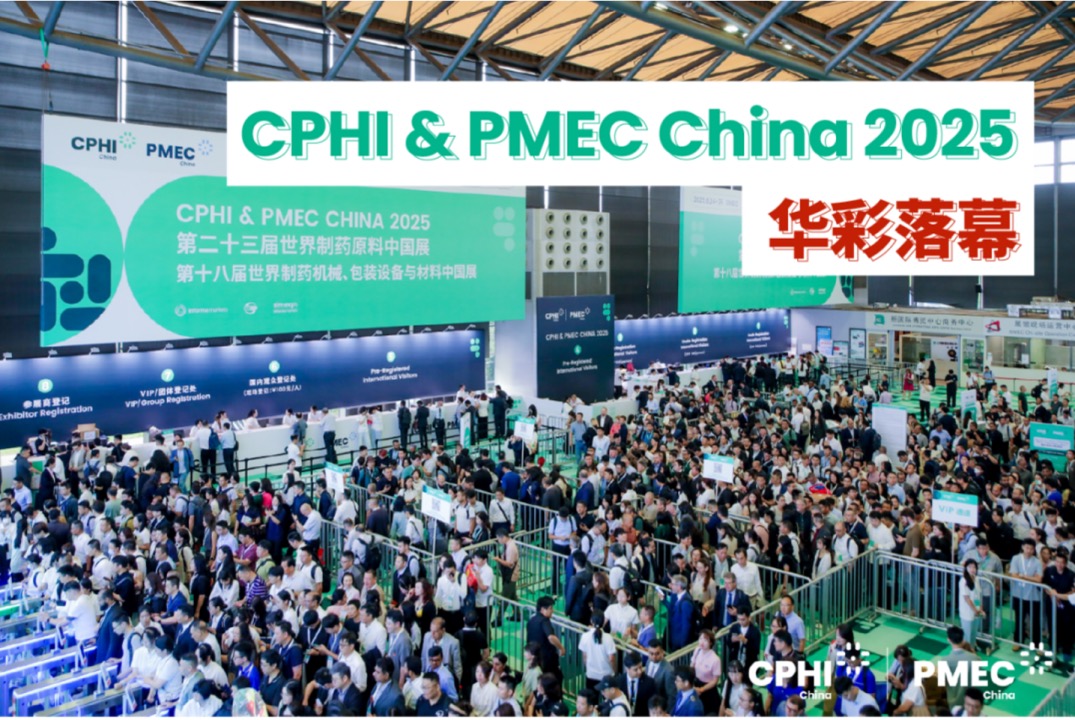
CPHI China 2025 ended successfully | Syntame talks with customers around the world about new opportunities for cooperation

The company team made a stunning appearance at the 22nd World Pharmaceutical Raw Materials China Exhibition (CPHI) at the Shanghai New International Expo Centre.
The company's sales team successfully participated in the 21st World Pharmaceutical Raw Materials China Exhibition (CPHI) at the Shanghai New International Expo Centre.